

Handicraft
Beginner’s Guide to Choosing a Wooden Chess Set – Size, Weight, Wood Type, Staunton

Dec
Choosing a wooden chess set is not just a purchase; it is an investment in experience, tradition, and long-term enjoyment. We often see beginners overwhelmed by options—different sizes, weights, wood types, finishes, and styles that all look appealing at first glance. This guide cuts through the noise and delivers a clear, structured, and practical approach to selecting the right wooden chess set. By the end, we will know exactly what matters, what doesn’t, and how to choose a set that fits our playing style, budget, and aesthetic preferences.
Why a Wooden Chess Set Remains the Gold Standard
Wooden chess sets have endured for centuries because they balance functionality, durability, and beauty. Unlike plastic or glass alternatives, wood offers warmth, tactile comfort, and visual harmony that enhances focus during play. When we sit across the board, the weight and texture of wooden pieces create a grounded feeling that elevates every move.
Wood also ages gracefully. Over time, natural patina develops, giving the set character rather than wear. For beginners, this means buying something that grows with us—from casual games to serious study—without feeling disposable. Wooden sets also carry cultural and historical significance, connecting us to the long lineage of chess players who relied on similar tools.
Understanding Chess Set Size: Board and Piece Proportions
Board Dimensions and Square Size
The foundation of any chess set is the board. Standard tournament boards measure 20 inches by 20 inches, with individual squares sized at 2 to 2.25 inches. This square size is critical because it determines how comfortably pieces fit without crowding.
For beginners, we recommend staying within this range. Smaller boards may look compact but can make gameplay feel cramped, especially during complex middle-game positions. Larger boards, while impressive, demand more space and can feel impractical for everyday use.
King Height and Proportional Balance
Chess sets are typically classified by the height of the king, which usually ranges from 3.5 inches to 4 inches in standard sets. A well-proportioned set follows the rule that the king’s base should be about 75–80% of the square size.
For example:
-
A 3.75-inch king pairs best with a 2.25-inch square
-
A 3.5-inch king fits comfortably on a 2-inch square
This balance ensures clarity on the board, reduces accidental knocks, and improves visual recognition for beginners.
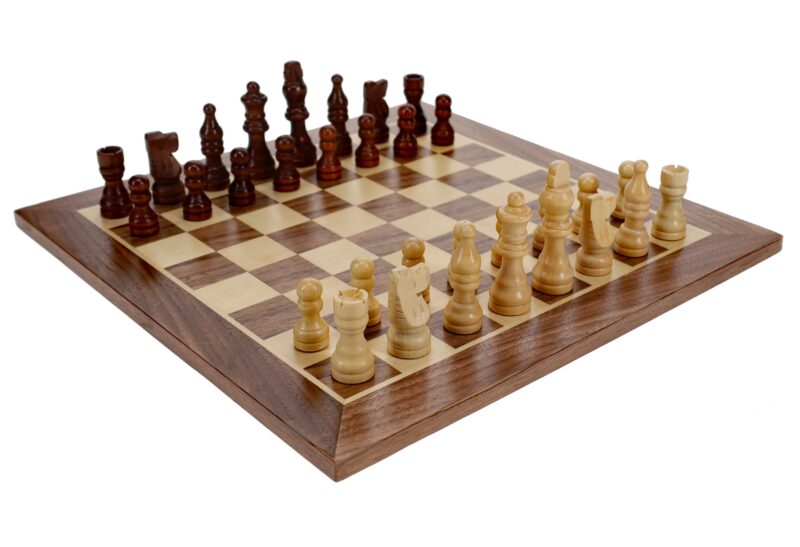
The Importance of Weight: Weighted vs. Unweighted Pieces
Why Weight Matters More Than You Think
Weight affects stability, control, and overall playing comfort. Unweighted pieces are lighter and easier to tip over, especially during fast games or casual play. Weighted pieces, on the other hand, contain metal inserts—usually lead or steel—inside the base.
Weighted wooden chess pieces feel anchored to the board. This stability improves precision and reduces distractions caused by accidental movement. For beginners, this translates to better focus and fewer interruptions.
Single-Weighted vs. Triple-Weighted Pieces
-
Single-weighted pieces offer a light, balanced feel suitable for casual play.
-
Double- or triple-weighted pieces provide a tournament-style experience with superior stability.
We recommend at least double-weighted pieces for beginners who plan to play regularly. The added weight enhances control without making the pieces feel cumbersome.
Exploring Wood Types: Beauty, Durability, and Feel
Common Woods Used in Chess Sets
Different woods influence not only appearance but also durability and price. Understanding these options helps us choose wisely.
-
Sheesham (Golden Rosewood): Durable, affordable, and widely used. Offers warm brown tones with visible grain.
-
Boxwood: The most common light-colored wood, valued for smooth texture and consistency.
-
Ebony: Dense, heavy, and luxurious. Produces deep black pieces but comes at a higher price.
-
Ebonized Boxwood: Boxwood stained black to mimic ebony, offering a cost-effective alternative.
-
Walnut: Rich brown hues with subtle grain, often used for boards rather than pieces.
-
Maple: Light, smooth, and durable, frequently paired with walnut boards.
Choosing the Right Wood for Beginners
For beginners, boxwood and sheesham combinations provide the best balance of cost, durability, and aesthetics. Ebony sets are stunning, but they require careful handling and maintenance. Starting with practical woods allows us to focus on learning the game rather than worrying about preservation.
Staunton Standards: The Universal Language of Chess
What Is the Staunton Design?
The Staunton chess design, introduced in 1849, is the global standard for tournament play. Its defining features include:
-
Distinctive knight design inspired by classical sculpture
-
Clear differentiation between pieces
-
Balanced proportions for readability
This design ensures that players instantly recognize each piece, reducing confusion and improving gameplay flow.
Why Beginners Should Choose Staunton Sets
Staunton sets are universally accepted in clubs, tournaments, and online play visuals. Learning with Staunton pieces helps beginners transition seamlessly into competitive environments. Decorative or abstract sets may look appealing, but they often sacrifice clarity and consistency.
Board Materials and Finishes: More Than Just Looks
Solid Wood vs. Veneer Boards
-
Solid wood boards are crafted from a single type of wood, offering durability and premium feel.
-
Veneer boards use a thin layer of quality wood over a stable core, making them more affordable and resistant to warping.
For beginners, high-quality veneer boards are an excellent choice. They provide visual appeal without the high cost or maintenance demands of solid boards.
Matte vs. Gloss Finish
Matte finishes reduce glare and enhance focus, especially under bright lighting. Gloss finishes look elegant but can cause reflections that distract during play. We recommend matte or satin finishes for practical, everyday use.
Themes and Aesthetics: Choosing a Style That Inspires Play
Traditional vs. Decorative Themes
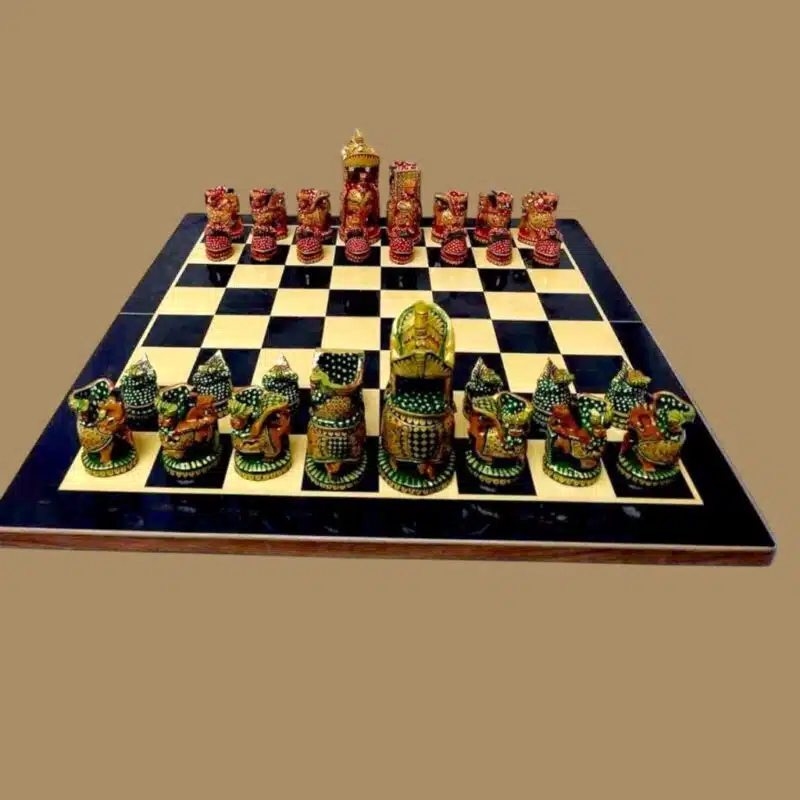
Traditional sets emphasize functionality and timeless design, while themed sets—such as medieval, historical, or artistic styles—prioritize visual storytelling.
For beginners, traditional aesthetics encourage regular play and learning. Decorative sets are better suited for collectors or display purposes, as intricate designs can complicate piece recognition.
Color Contrast and Visual Comfort
High contrast between light and dark pieces improves readability. Natural wood tones with clear differentiation help beginners track the board more effectively, reducing eye strain during long sessions.
Portability and Storage Considerations
Folding Boards and Storage Boxes
Many wooden chess sets include folding boards with internal compartments for piece storage. This feature protects pieces, reduces clutter, and makes transport easy.
Alternatively, wooden storage boxes with felt-lined interiors offer superior protection and organization. For beginners who plan to travel or attend club games, storage solutions are essential.
Weight and Travel Practicality
While heavier sets feel luxurious, they may not be ideal for frequent travel. A medium-weight set strikes the perfect balance between stability and portability.
Maintenance and Care: Keeping Your Set in Prime Condition
Wooden chess sets require minimal but consistent care. Regular dusting with a soft cloth prevents buildup. Occasional polishing with natural wood oil maintains luster and prevents drying.
Avoid exposure to direct sunlight, extreme humidity, or temperature fluctuations. With proper care, a wooden chess set can last decades, becoming a cherished personal artifact.
Budget Planning: Getting the Best Value
Entry-Level vs. Premium Sets
Beginner-friendly wooden chess sets typically fall within a reasonable price range while offering excellent craftsmanship. Spending more does not always guarantee better playability.
We recommend prioritizing:
-
Staunton design
-
Proper size and weight
-
Durable wood types
Luxury features can always be explored later as preferences evolve.
Final Thoughts: Choosing Confidence Over Confusion
Selecting a wooden chess set does not have to be complicated. By focusing on size, weight, wood type, Staunton standards, and practical aesthetics, we equip ourselves with a set that enhances learning and enjoyment. The right chess set invites us to play more often, think more deeply, and appreciate the timeless beauty of the game.
A thoughtfully chosen wooden chess set becomes more than equipment—it becomes a companion on our chess journey.